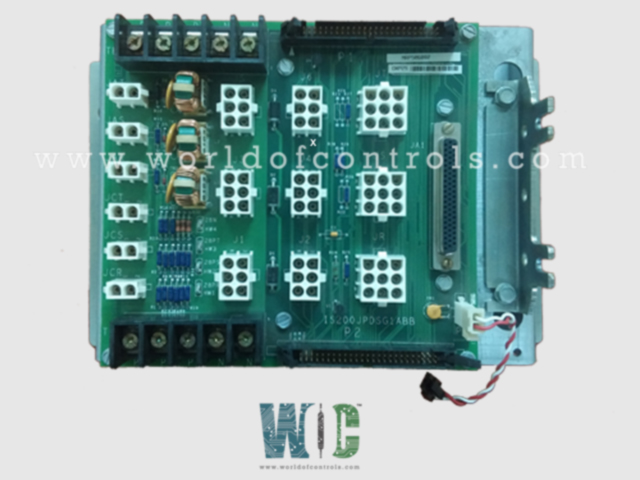
SPECIFICATIONS
Part No.: IS200JPDSG1AEC
Manufacturer: General Electric
Country of Manufacture: United States of America (USA)
Temperature Operating: -30 to 65 o C
Number of channels: 8
Span: 0.3532 to 4.054 V
Product Type: Power Distribution Board
Availability: In Stock
Series: Mark VIe
Functional Description
IS200JPDSG1AEC is an Power Distribution Board developed by GE. It is a part of Mark VIe excitation system. The JPDS serves as a pivotal component within the control system, facilitating the distribution of power and integrating feedback mechanisms crucial for system functionality. It operates by receiving a 28 V dc input power from external sources such as ac/dc or dc/dc converters. This input power is then efficiently distributed throughout the control system, providing essential electrical power to various components and subsystems.
Features
- Integration with PDM System: Within the control system framework, JPDS seamlessly integrates into the Power Distribution Module (PDM) system. It not only distributes power but also interfaces with the PDM system to receive crucial feedback signals via the PPDA Input/Output pack. This feedback is instrumental in monitoring system performance and ensuring optimal power distribution.
- Compatibility with Feedback Signal Connectors: The board is designed to be compatible with the feedback signal P1/P2 connectors found on JPDB, JPDF, and JPDE modules. These connectors serve as the interface points for transmitting feedback signals to the I/O pack, allowing for efficient communication and monitoring within the control system.
- Compatibility with PPDA I/O Pack: Furthermore, the JPDS features a DC-62 connector, which is specifically compatible with the I/O pack. This compatibility ensures seamless integration between the JPDS and the I/O pack, enabling comprehensive monitoring and control capabilities within the control system architecture.
Installation
- Mounting Options: Installed using a metal holder designed to fit on a vertical DIN-rail. This arrangement allows for easy integration alongside other power distribution boards within the control system setup. Alternatively, it may also be available with a metal holder designed for direct mounting, providing flexibility to accommodate different installation configurations and requirements.
- Wiring Connections:Proper wiring connections are crucial for ensuring the efficient distribution of power within the control system. Installers should refer to the wiring diagrams provided by the manufacturer to determine the correct routing for power input and output connections. This involves connecting the JPDS to external power sources and distributing power to various components and subsystems within the control system.
- Diagnostic Connector: Features a 50-pin diagnostic connector mounted on both the top and bottom of the board. This connector serves as an interface point for diagnostic purposes, allowing technicians to monitor and troubleshoot the system more effectively. Diagnostic connectors provide access to diagnostic information and facilitate diagnostic testing and analysis when needed.
- Securing the Installation:Once mounted and wired, it is essential to ensure that the unit is securely fastened to prevent movement or damage during operation. Proper mounting and securing of the unit also help maintain stable electrical connections and ensure reliable performance over time.
- Compliance with Guidelines: During installation, installers should adhere to all relevant safety guidelines and regulations to ensure the safety and integrity of the installation. This includes following manufacturer instructions, using appropriate tools and equipment, and complying with electrical codes and standards applicable to the installation location.
Physical Arrangement
- Power Distribution: Acts as a central hub for power distribution within the control panel. It accepts power input from cables and efficiently distributes it to various connectors, including JR, JS, and JT connectors. This ensures that power is supplied to the necessary components and subsystems within the control system.
- Visibility of Indicator Lights: When hosting a PPDA (Power Distribution Analog) Input/Output pack, JPDS is mounted in such a way that the indicator lights on the pack are easily visible. This allows operators and technicians to monitor the status and performance of the PPDA pack without difficulty, facilitating prompt troubleshooting and maintenance if required.
- Accessibility of Terminal Board Connections: When two boards are used together within the control panel, they are mounted to ensure that any terminal board connections are easily accessible. This arrangement simplifies installation, maintenance, and troubleshooting tasks, as technicians can easily access and manipulate terminal connections as needed.
- Non-Critical Location within the Panel: While the location of module within the panel is not critical, careful consideration should still be given to its placement. Optimal placement ensures efficient cable routing, minimizes signal interference, and facilitates easy access for installation and maintenance purposes.
- Feedback Signal Transmission: Connector P1 on JPDS is responsible for transmitting feedback signals to a board hosting a I/O pack. On the other hand, Connector P2 receives feedback signals from other power distribution boards and passes them out of Connector P1 to the PPDA. When planning feedback cable connections from JPDS P2 to another power distribution board, careful consideration should be given to feedback cable routing to ensure optimal signal transmission and minimal interference.
The WOC team is always available to help you with your Mark VIe requirements. For more information, please contact WOC.
Frequently Asked Questions
What is IS200JPDSG1AEC?
It is an Power Distribution Board developed by GE under the Mark VIe series.
How is power distribution managed within the JPDS?
The internal wiring of the JPDS allows for either three independent 28 V dc power buses or a combined single internal bus configuration. Each bus is capable of handling up to 25 A of current, while they share a common ground sized for 75 A.
What are the advantages of having three independent power buses?
Having three independent power buses enables the operation of R, S, and T controllers and their associated I/O from separate power supplies. In the event of a supply failure, only one controller and its I/O are affected, minimizing the impact on the other two channels.
How does JPDS ensure continuous power supply to the PPDA I/O pack?
It includes a dedicated 28 V diode-OR power output specifically for the PPDA I/O pack. This feature ensures that power system feedback is maintained even in the event of a channel power failure, preventing the loss of critical feedback signals and ensuring system reliability.