SPECIFICATIONS
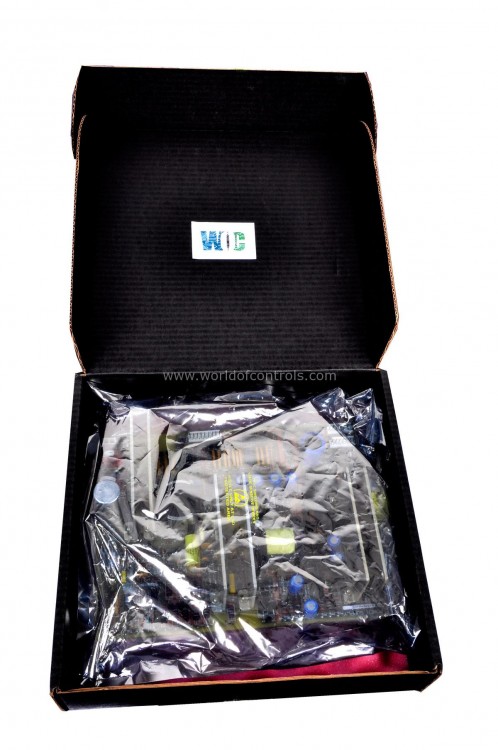
Part Number: DS200SDCCF1AXA
Manufacturer: General Electric
Series: Mark V
Product type: GE Software PROM Set
Availability: In Stock
Country of Manufacture: United States (USA)
Functional Description
DS200SDCCF1AXA is a Software PROM Set designed and developed by GE. It is a part of the Mark V control system. Mark V represents a highly adaptable turbine control system engineered to address the intricate and dynamic demands of contemporary power generation. It is a versatile and fully programmable control system that offers cutting-edge functionalities in control, monitoring, and protection.
Role of the DS200SDCCF1AXA in the Mark V System
- The Software PROM Set is associated with the software storage requirements of the Mark V control architecture. PROM devices provide non-volatile memory, meaning the information stored in them is retained even when the control system is powered down.
- This makes PROM-based software storage particularly important for turbine control applications, where consistent and reliable execution of programmed control functions is essential.
- When replacing a Software PROM Set, the correct part number and software configuration should be verified against the existing Mark V system. Using an incompatible PROM set can result in software, configuration, or system compatibility issues.
- GE Mark V Control System
- The Mark V control system was engineered to provide integrated turbine control and protection through a combination of control processors, input/output hardware, terminal boards, software, and associated communication interfaces.
- Its programmable architecture allows the system to be configured according to the specific requirements of different turbine installations. The control system can continuously process input signals, execute programmed control logic, and generate appropriate outputs for turbine operation.
NEMA-1 Control Enclosure
- The standard enclosure used for turbine control applications is a NEMA-1 cabinet. It is designed primarily for indoor applications and provides protection for the control equipment against normal environmental conditions encountered inside an industrial facility.
- The enclosure uses convection cooling, allowing heat generated by the electronic components to dissipate naturally without requiring a dedicated forced-air cooling arrangement in the standard configuration.
- Front access is provided to make inspection and maintenance more convenient. The cabinet can also accommodate flexible cable entry from either the top or bottom, depending on the installation requirements.
Cabinet Construction
- The Mark V enclosure is constructed primarily from hot-rolled, low-carbon, 12-gauge steel, with a nominal thickness of approximately 0.105 inches. This construction provides the mechanical strength required to support the control equipment and protect internal components during normal operation and maintenance.
- Access plates may use a heavier steel gauge where additional structural strength is required. The cabinet construction is intended to provide a robust mounting environment for the printed circuit boards, terminal boards, wiring, and other control-system components.
Surface Protection
- To provide corrosion resistance and a durable external finish, the enclosure uses a multi-stage paint process incorporating E-coat and powder coating.
- The resulting paint thickness is approximately 1.5 mils. Both the exterior and interior surfaces use an ANSI-70 light gray finish, providing a consistent appearance across the control cabinet.
- The protective coating also helps maintain the enclosure's appearance and provides additional protection to the steel cabinet in an industrial operating environment.
- Mark V Temperature Specifications
- The standard Mark V enclosure is designed for continuous operation within an ambient temperature range of approximately 0°C to 45°C.
- During maintenance activities, the equipment can accommodate temperatures of up to approximately 50°C, providing additional tolerance for temporary maintenance conditions.
- Maintaining the recommended ambient operating conditions is important because excessive temperature can affect the reliability and service life of electronic components, printed circuit boards, memory devices, and other control-system hardware.
Mark V Core and PCB Configuration
- Inside a Mark V control panel, the printed circuit boards and I/O terminal boards are organized around structural assemblies known as cores.
- A core is essentially a sheet-metal housing or mounting structure designed to support the control-system boards. It incorporates board carriers that provide mounting locations for both stationary and movable printed circuit boards.
- A typical core can accommodate up to five PCBs mounted on its board carriers. The arrangement allows the control hardware to be organized in a compact and accessible configuration.
- In addition to printed circuit boards, a core can accommodate up to four I/O terminal boards. These terminal boards use high-density, compression-type terminals to provide connections between field wiring and the turbine control system.
- This modular arrangement helps organize the Mark V hardware while simplifying access during inspection, troubleshooting, replacement, and maintenance.
Cooling and Purification Options
- Although the standard Mark V enclosure uses convection cooling, the system can be adapted for applications that require additional environmental control.
- Depending on the specific turbine installation and operating environment, cooling and air purification systems can be incorporated into the control cabinet. These options can help maintain suitable internal environmental conditions where temperature, dust, or other site-specific factors may affect electronic equipment.
- Such adaptations are particularly relevant for installations operating in demanding industrial environments where maintaining stable conditions around control electronics is important for long-term reliability.
Importance of Proper Mark V Hardware Maintenance
- The Mark V control system consists of multiple interconnected hardware and software elements. Components such as printed circuit boards, terminal boards, processors, memory devices, and Software PROM Sets must work together according to the system's original configuration.
- For this reason, replacement components should be carefully matched to the existing Mark V system. When replacing Software PROM Set, verify the part number, hardware configuration, software revision, and application requirements before installation.
- Proper identification helps reduce the risk of compatibility problems and supports reliable operation of the turbine control system.
WOC is available 24x7 to assist you with any of your General Electric requirements. Please contact us by phone or email for pricing and availability on GE, Bently Nevada or Woodward parts and repairs.
FREQUENTLY ASKED QUESTIONS
What is DS200SDCCF1AXA?
It is a GE Software PROM Set designed and developed by GE
What temperature range can the enclosure endure during operation and maintenance?
The enclosure is rated for continuous operation within an ambient temperature range of 0 to 45oC. During maintenance periods, it can operate up to 50oC, allowing crucial maintenance procedures without affecting performance.
How are printed circuit boards (PCBs) and terminal boards arranged within the control panel?
They are organized within cores, which act as sheet metal housings accommodating stationary and moveable PCBs on board carriers. Cores can hold up to five PCBs and, additionally, up to four I/O terminal boards featuring high-density compression-type terminals.
Can the system adapt to specific operational requirements?
Yes, the system is customizable to accommodate cooling and purification systems tailored to meet specific operational needs, ensuring optimized performance and reliability.