World Of Controls understands the criticality of your requirement and works towards reducing the lead time as much as possible.
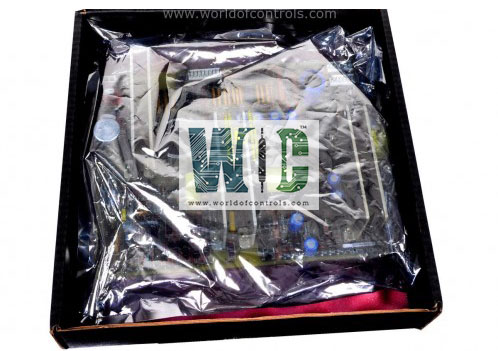
IS200TBQCH1A - Analog Input Termination Module is available in stock which ships the same day.
IS200TBQCH1A - Analog Input Termination Module comes in UNUSED as well as REBUILT condition.
To avail our best deals for IS200TBQCH1A - Analog Input Termination Module, contact us and we will get back to you within 24 hours.
SPECIFICATIONS:
Part Number: IS200TBQCH1A
Manufacturer: General Electric
Series: Mark VI
Product Type: Analog Input Termination Module
Number of channels: 24
Power supply voltage: 28 V dc
Voltage Range: 14 to 32 V dc
Mounting: DIN-rail mounting
Technology: Surface mount
Operating temperature: -30 to 65°C
Size: 33.02 cm high x 17.8 cm
Repair: 3-7 Days
Availability: In Stock
Country of Origin: United States
Manual: GEH-6153
FUNCTIONAL DESCRIPTION:
IS200TBQCH1A is an Analog Input Termination Module manufactured and designed by General Electric as part of the Mark VI Series used in GE Speedtronic Gas Turbine Control Systems. On the R1, R2, and R3 cores, position 9 houses the Analog Input Termination Module (TBQC). The TCQA board in each core is connected to the TBQC through the LVDT/R position inputs and the 420 mA inputs. The TCQA boards in the relevant cores are read for the 20 - 200 mA outputs. Using hardware jumpers on the TBQC terminal board, the outputs can be set to have a maximum current of either 20 mA or 200 mA. Some inputs can be used as either voltage or current inputs by the selection of a jumper. In the current input mode, a burden resistor produces a voltage from the transducer current. This voltage is then internally parallel-wired with ribbon cables to the TCQA boards in R1 and R3. Diagnostics monitor the inputs to ensure that they are within their proper range. TBQC terminal board selects the maximum current output range of either 20 mA or 200 mA.
TBQCH1A CONNECTIONS:
The TBQC module interfaces with the TCQA boards through two main connectors, JBR and JFR, ensuring accurate signal communication for GE Mark VI Speedtronic systems. JBR handles 4-20 mA analog input signals from field devices such as sensors and transducers, and simultaneously reads the mA output signals to the TCQA boards in the respective cores (R1, R2, R3). The inputs from JBR are routed internally through BJ1-BJ15 jumpers to the DCOM path, allowing precise current translation and monitoring. Hardware jumpers BJ16 and BJ17 select the maximum output current for the mA channels, either 20 mA or 200 mA, while built-in diagnostics ensure all signals remain within the proper range. JFR, on the other hand, transmits Linear Variable Differential Transformer (LVDT) and Resolver position input signals to the TCQA boards, providing real-time mechanical position feedback for valves, actuators, or other turbine components. By feeding accurate position data to each core simultaneously, JFR ensures redundancy, system reliability, and precise turbine control, with continuous diagnostics verifying signal integrity and range.
TBQC HARDWARE CONFIGURATION:
It consists of jumpers BJ1 through BJ17, which allow flexible setup and signal routing for the module. BJ1 through BJ15 connect the 4-20 mA input signals, channels 1 to 15, to the DCOM communication path, enabling the module to accurately transmit analog signals from field devices to the TCQA boards in the respective cores. BJ16 and BJ17 are used to configure the maximum current output range for the two mA output channels, allowing the outputs to be set to either 20 mA or 200 mA, depending on system requirements. This jumper-based configuration ensures that the TBQC module can be tailored to different input types, current ranges, and control system needs, while maintaining precise signal monitoring and diagnostics for reliable turbine operation.
WOC offers the largest stock of GE Speedtronic Gas Turbine Control System replacement parts and provides fast, reliable repairs for faulty modules. We supply both unused and rebuilt components, all backed by a warranty, and our team of experts is available around the clock to support your OEM and automation needs. Whether you require replacement parts, repairs, or technical guidance, our specialists ensure accurate solutions and prompt assistance for pricing, availability, and system support.
What is the IS200TBQCH1A?
It collects analog signals from sensors and transducers and transmits them to the TCQA boards in R1, R2, and R3 cores. This enables precise turbine monitoring and control for functions like fuel flow and actuator positions.
How are signals transmitted through the TBQC?
The TBQC module uses JBR connectors for 4-20 mA input/output signals and JFR connectors for LVDT/R position signals. Internal jumpers (BJ1-BJ17) manage channel routing and output current ranges. Built-in diagnostics ensure all signals remain within proper limits.
How does the module communicate signals to the control system?
The TBQC module uses JBR connectors for 4-20 mA signals and JFR connectors for LVDT/R position inputs. Internal jumpers (BJ1–BJ17) handle channel routing and output current range selection. Diagnostics continuously monitor the signals to ensure accuracy and safety.