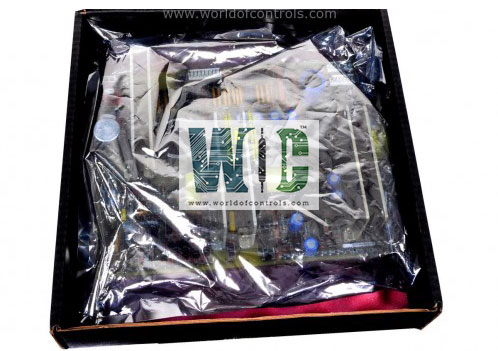
World Of Controls understands the criticality of your requirement and works towards reducing the lead time as much as possible.
IS200QTBAH1A - Trip Terminal Board (QTBA) is available in stock which ships the same day.
IS200QTBAH1A - Trip Terminal Board (QTBA) comes in UNUSED as well as REBUILT condition.
To avail our best deals for IS200QTBAH1A - Trip Terminal Board (QTBA), contact us and we will get back to you within 24 hours.
SPECIFICATIONS:
Part Number: IS200QTBAH1A
Manufacturer: General Electric (GE)
Series: Mark VI
Product Type: Trip Terminal Board (QTBA)
Functional Acronym: QTBA
Number of Relay Channels: 9 Relays
Input Voltage: 24 V DC (Nominal) / 125 V DC (Trip Circuit)
Protection: Integrated Fuses and Suppression
Terminal Blocks: 2 High-Density Barrier Terminal Blocks
Board Type: Simplex / TMR Compatible
Operating Temperature: -30�C to +65�C (-22�F to +149�F)
Availability: In Stock
Country of Origin: USA
FUNCTIONAL DESCRIPTION:
The IS200QTBAH1A is a specialized Trip Terminal Board (QTBA) developed by General Electric for the Mark VI control system. It serves as a critical hardware interface within the turbine�s emergency trip string. The QTBA is designed to manage the high-current DC signals required to actuate the fuel or steam stop valve solenoids. By acting as the physical termination point for the trip solenoid wiring, the board ensures that protective commands from the control processors are executed with absolute reliability, maintaining the safety of the turbine during overspeed or emergency stop conditions.
The Termination Module (QTBA) is located at location 6 on the R1, R2, and R3 cores. The QTBA terminal board lands the signals used by the TCQC board in the respective cores. The COREBUS connections are also on the QTBA terminal boards. The inputs for pulse rates and megawatt transducers are connected on the QTBA terminal board and written to the TCQC board. The LVDT/R excitation and servo valve outputs are also connected to the QTBA terminal board from the TCQC board. The Terminal Interface Monitor (TIMN) connections are also located on the QTBA terminal board. A bypass relay that allows the COREBUS to continue communicating if power is lost on the QTBA terminal board is located there.
RELAY ARCHITECTURE & TRIP LOGIC:
The board is populated with a matrix of nine (9) high-reliability relays. These relays are typically configured to support both Simplex and Triple Modular Redundant (TMR) control schemes. In a TMR configuration, the relays are wired in a voting arrangement (2-out-of-3) to ensure that a single component failure does not cause a nuisance trip, while also guaranteeing that a valid trip command from any two controllers will successfully de-energize the solenoids. This hardware-level voting is essential for high-availability power generation assets.
SIGNAL CONDITIONING & CIRCUIT PROTECTION:
To withstand the harsh electrical transients common in industrial power plants, the Trip Terminal Board includes several layers of protection:
WIRING & INTERCONNECTIVITY:
The hardware features two heavy-duty, barrier-style terminal blocks designed for secure field conductor termination. These blocks can accommodate up to #12 AWG wiring, suitable for carrying the high inrush currents of large solenoid valves. The QTBAH1A interfaces with the Mark VI rack via high-density ribbon cables or D-type connectors, allowing for a clean, modular installation within the control cabinet. The board's layout is specifically optimized to separate low-voltage logic signals from high-voltage trip power, reducing the risk of electromagnetic interference (EMI).
DIAGNOSTICS & FIELD MAINTENANCE:
The Trip Terminal Board facilitates rapid troubleshooting through its transparent diagnostic design. Maintenance personnel can verify relay operation and fuse integrity through:
WHY BUY FROM WOC:
WOC is a premier global provider of GE Mark VI turbine control components. We maintain a comprehensive stock of the IS200QTBAH1A, available in both UNUSED and meticulously REBUILT conditions. Each unit undergoes exhaustive continuity and insulation resistance testing to ensure it meets original OEM specifications for safety-critical trip circuits. Backed by our standard warranty and 24/7 technical support, WOC is your trusted partner for maintaining the protective layers of your turbine control system.
What is the IS200QTBAH1A?
It is a Trip Terminal Board (QTBA) manufactured by GE for the Mark VI control system. It acts as the final hardware interface between the turbine control's digital trip logic and the heavy-duty solenoid valves used for emergency shutdowns. It provides the mechanical termination, relay voting logic, and circuit protection necessary to safely de-energize fuel and steam stop valves.
What is the primary function of the Trip Terminal Board?
The QTBAH1A is a Trip Terminal Board used in GE Mark VI systems. Its primary job is to interface the control system's trip logic with the physical solenoid valves that shut down the turbine in an emergency. It provides the relay switching and circuit protection required for these high-power trip strings.
How is electrical isolation maintained between the field solenoids and the Mark VI control rack?
The board is designed with distinct physical trace separation and galvanic isolation barriers. The trip power (typically 125 VDC or 24 VDC field power) is isolated from the low-voltage control signals from the I/O rack. This prevents field ground faults or surges from migrating into the processor backplane, ensuring that a fault in the solenoid circuit does not compromise the entire control system.
How does the Trip Terminal Board execute the 2-out-of-3 voting logic for TMR systems?
In Triple Modular Redundant (TMR) applications, the IS200QTBAH1A utilizes its nine onboard relays wired in a specific series-parallel matrix. This physical circuit configuration ensures that the trip solenoids remain energized only if at least two of the three controllers (R, S, and T) provide a Run signal. If any two controllers issue a trip command, the circuit path is broken, providing a fail-safe hardware-level shutdown independent of software processing.