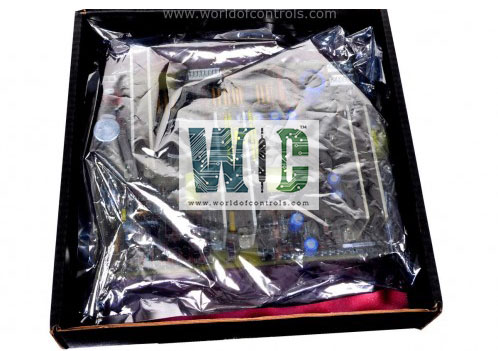
World Of Controls understands the criticality of your requirement and works towards reducing the lead time as much as possible.
IS200EXIBG1AEB - Exciter Bridge Interface Module is available in stock which ships the same day.
IS200EXIBG1AEB - Exciter Bridge Interface Module comes in UNUSED as well as REBUILT condition.
To avail our best deals for IS200EXIBG1AEB - Exciter Bridge Interface Module, contact us and we will get back to you within 24 hours.
SPECIFICATIONS:
Part Number: IS200EXIBG1AEB
Manufacturer: General Electric
Series: EX2100
Product Type: Exciter Bridge Interface Module
Power to Relay Coil: 125 V DC
Input Signal: 5V–15V
Operating Voltage Range: 18–32 V DC
Operating temperature: -30 to +65°C
Size: 33.02 cm high x 10.16 cm
Connectors: Multi-pin connectors
Feedback Signals: Bridge voltage
Protection Features: Overcurrent
Connector: 37-pin
Mounting: DIN rail
Communication Interfaces: EXTB, EGPA
Mounting Type: Rack or panel-mounted
Weight: 2.5 kg
Repair: 3-7 Days
Availability: In Stock
Country of Origin: United States
FUNCTIONAL DESCRIPTION:
IS200EXIBG1AEB is an Exciter Bridge Interface Module manufactured and designed by General Electric as part of the EX2100 Series used in GE Excitation Control Systems. The Exciter Bridge Interface Module (EBIM) is a specialized signal interface used in GE excitation control systems, typically paired with the Mark VIe or Digital Excitation Control (DEC) systems. It serves as the critical interface between the excitation controller and the generator’s exciter bridge, converting low-level control commands into precise gate-firing signals required for the exciter thyristors. By regulating the exciter bridge operation, the EBIM ensures stable generator voltage output, accurate reactive power control, and reliable excitation system performance.
The module continuously monitors the status of the exciter bridge, detecting faults such as overcurrent, short circuits, or misfiring of thyristors, and communicates these conditions back to the controller for corrective action. Its design includes robust protection features, signal isolation, and diagnostic capability, allowing seamless integration into high-reliability power generation systems. The EBIM is typically mounted on a panel or DIN rail and interfaces through standard connectors, ensuring easy installation and serviceability.
INSTALLATION:
The Exciter Bridge Interface Module (EBIM) should be installed in a clean, dry, and vibration-free location, preferably on a panel or DIN rail, with adequate spacing for airflow and maintenance access. All electrical connections must be made according to the manufacturer’s wiring diagram, including input control signals from the Digital Excitation Control (DEC) or Mark VIe controller and output gate signals to the exciter bridge thyristors. Proper grounding of the module is essential to prevent electrical noise or damage. Before installation, ensure that all circuits are de-energized and follow appropriate safety procedures, including lockout/tagout. After mounting and wiring, verify all connections, power up the system, and confirm that the EBIM is communicating correctly with the controller and delivering gate pulses to the exciter bridge without any fault indications. Installation should always be performed by qualified personnel following system-specific manuals and local electrical codes.
OPERATION:
The Exciter Bridge Interface Module (EBIM) operates as the interface between the excitation controller and the generator’s exciter bridge, converting low-level control signals from the Digital Excitation Control (DEC) or Mark VIe system into precise gate firing pulses for the thyristors. It continuously monitors the status of the exciter bridge, detecting faults such as overcurrent, misfiring, or short circuits, and provides feedback to the controller for corrective action. By regulating the bridge operation, the EBIM ensures stable generator voltage, accurate reactive power control, and reliable excitation system performance. The module’s protection features and diagnostic capabilities enable safe, high-speed operation, making it essential for the proper functioning of industrial and utility generator excitation systems.
WOC offers the largest inventory of OEM replacement parts for GE Excitation Control Systems, along with expert repair and refurbishment services for faulty boards, restoring them to OEM specifications for reliable performance. We also provide unused and rebuilt components, all thoroughly tested and backed by a comprehensive warranty to ensure quality and durability. Our team of technical experts is available 24/7 to assist with part selection, troubleshooting, system support, and all automation needs. For pricing, availability, or service assistance, contact WOC by phone or email, and we will deliver prompt, reliable solutions to keep your systems operating efficiently.
How is the EBIM connected to the excitation system?
Input control signals are received from the DEC or Mark VIe controller via a standard connector, typically a 37-pin D-type. The module outputs gate drive signals to the exciter bridge thyristors, and proper grounding is required to prevent noise and ensure signal integrity.
What is the primary function of the EBIM?
The EBIM serves as the interface between the excitation controller (DEC or Mark VIe) and the generator’s exciter bridge. It converts low-level control signals into precise gate firing pulses for the thyristors, ensuring stable voltage output and accurate reactive power control. The module also monitors bridge operation and communicates faults to the controller.
How does the EBIM ensure safe operation of the exciter bridge?
The module includes protection features such as overcurrent detection, misfire detection, and short-circuit monitoring. It isolates the control signals from high-power circuits and provides diagnostic feedback, allowing the controller to take corrective action before damage occurs.