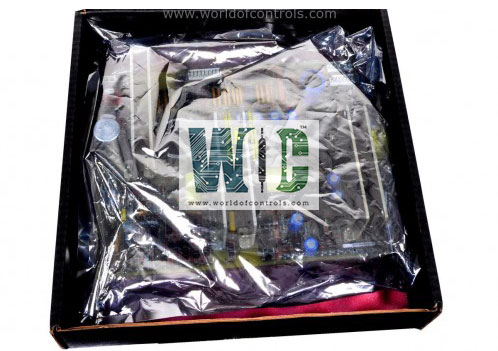
World Of Controls understands the criticality of your requirement and works towards reducing the lead time as much as possible.
IS200DTAOH1A - Simplex DIN-rail Mounted Analog Output Terminal Board is available in stock which ships the same day.
IS200DTAOH1A - Simplex DIN-rail Mounted Analog Output Terminal Board comes in UNUSED as well as REBUILT condition.
To avail our best deals for IS200DTAOH1A - Simplex DIN-rail Mounted Analog Output Terminal Board, contact us and we will get back to you within 24 hours.
TECHNICAL SPECIFICATIONS:
Part Number: IS200DTAOH1A
Manufacturer: General Electric (GE)
Series: Mark VI Speedtronic
Board Type: Simplex Terminal Board (DIN-rail Mounted)
Functional Acronym: DTAO
Number of Analog Outputs: 8 Channels
Output Signal Range: 0–20 mA or 4–20 mA (Software Configurable)
Maximum Load: 500 Ohms
A/D Resolution: 16-Bit
Isolation: Galvanic Isolation for Field Signals
Connectors: (1) 37-pin D-type Connector (JR1)
Terminal Blocks: Euro-style Barrier Terminal Blocks
Operating Temp: -30 °C to +65 °C (-22 °F to +149 °F)
Availability: In Stock
Origin: United States
FUNCTIONAL DESCRIPTION:
The IS200DTAOH1A is an 8-Channel Simplex Analog Output (DTAO) Terminal Board designed and manufactured for the General Electric (GE) Mark VI Speedtronic control system. This compact, DIN-rail-mounted module serves as the interface between the Mark VI I/O processor and field devices such as fuel valves, positioners, and meters. It converts digital commands from the control system into precise analog current signals to regulate turbine operations.
COMPACT SIMPLEX DESIGN
As part of the D-style terminal board family, the Simplex Analog Output (DTAO) Terminal Board is specifically engineered for Simplex (non-redundant) applications. Its small form factor and integrated plastic DIN-rail mounting clips allow for high-density installation within control cabinets, making it an ideal choice for localized or auxiliary control functions where cabinet space is at a premium.
ANALOG SIGNAL CONDITIONING
The board is capable of driving up to 8 independent analog loops. Each channel is designed to support standard 4–20 mA industrial signals, providing the linear output necessary for proportional control of hydraulic or pneumatic actuators. The 16-bit resolution ensures that the turbine governor can make exceptionally fine adjustments to fuel flow or steam valve positions, which is critical for maintaining grid frequency and engine stability.
SYSTEM INTERFACE AND DIAGNOSTICS
The DIN-rail Mounted Analog Output connects to a Mark VI processor board (typically via a VAIC or PAIC card) using a single 37-pin D-type cable at the JR1 connector. The board includes onboard identification circuitry that allows the central controller to automatically recognize the hardware and monitor its health. In the event of a field wiring fault, such as an open circuit in the output loop, the board facilitates diagnostic feedback to the control software, enabling rapid troubleshooting and maintenance.
WHY BUY FROM WOC:
World of Controls supports the continuous performance of your GE Speedtronic systems by offering the IS200DTAOH1A in both UNUSED and REBUILT conditions. Every DTAO board undergoes rigorous functional testing, including load-accuracy verification across all 8 output channels and signal integrity checks at the JR1 interface. We maintain a robust inventory of Mark VI DIN-rail modules to provide rapid support for your critical maintenance needs. With global logistics and 24/7 technical expertise, WOC is your trusted partner for high-precision turbine control hardware.
What is the GE IS200DTAOH1A?
The IS200DTAOH1A is a Simplex Analog Output (DTAO) terminal board for the Mark VI system. It provides 8 channels for driving 4–20 mA analog field devices.
How is this board mounted?
The board is designed for DIN-rail mounting. It features a plastic carrier base that snaps directly onto standard 35mm DIN-rails, allowing for organized and space-efficient cabinet layouts.
How many analog outputs are available on this module?
The Simplex Analog Output (DTAO) Terminal Board provides 8 analog output channels. If your application requires more outputs, additional DTAO boards can be added to the system, depending on the available ports on your I/O processor.
Does this board support 0–20 mA outputs?
Yes, the output range is software-configurable. While 4–20 mA is the industrial standard, the board can be set to 0–20 mA via the Mark VI engineering software (Toolbox) to match the requirements of your specific field actuators.