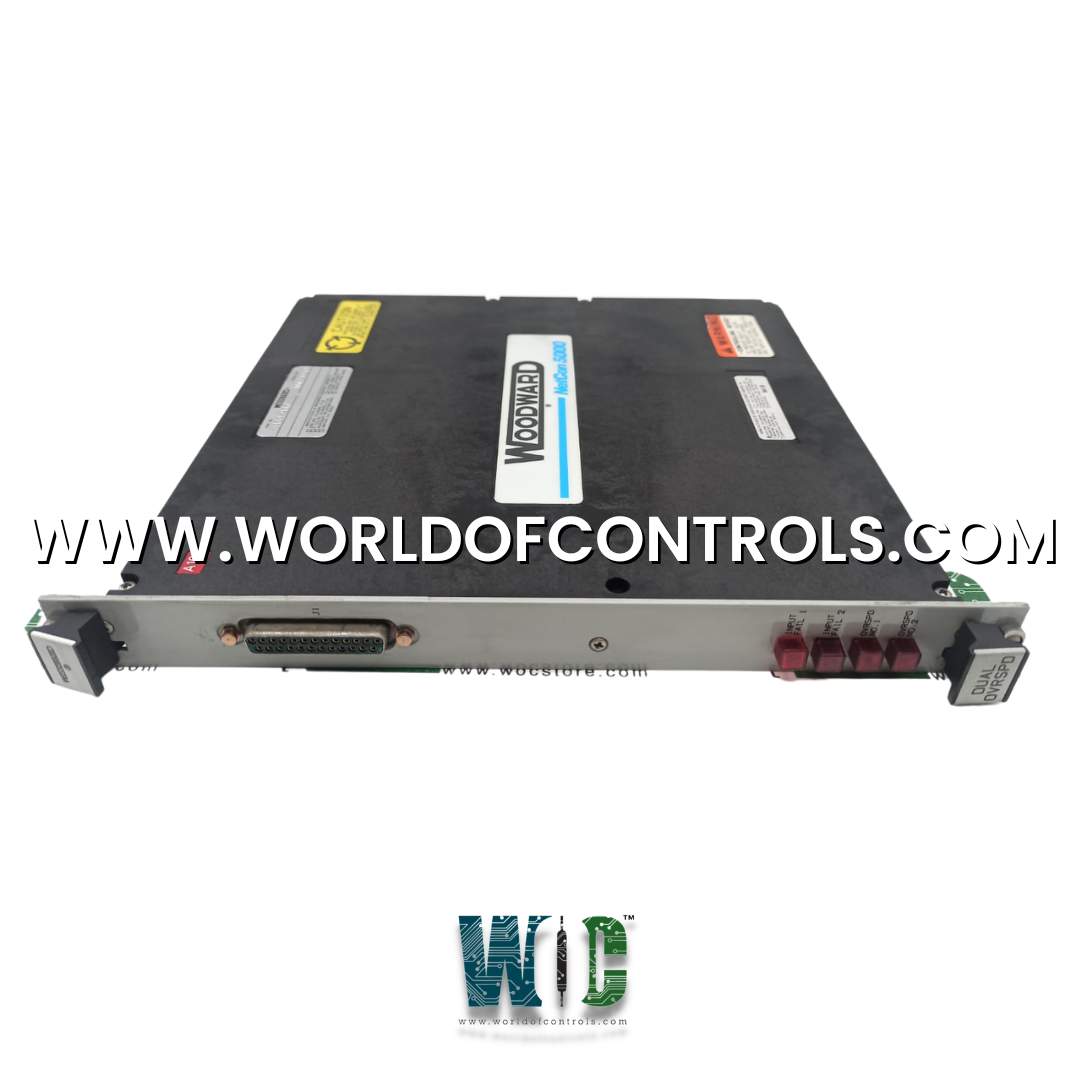
World Of Controls understands the criticality of your requirement and works towards reducing the lead time as much as possible.
5463-879 - Isolated Thermocouple (T/C) Analog Input Module is available in stock which ships the same day.
5463-879 - Isolated Thermocouple (T/C) Analog Input Module comes in UNUSED as well as REBUILT condition.
To avail our best deals for 5463-879 - Isolated Thermocouple (T/C) Analog Input Module, contact us and we will get back to you within 24 hours.
TECHNICAL SPECIFICATIONS:
Part Number: 5463-879
Manufacturer: Woodward
Series: NetCon 5000 Series
Product Type: Isolated Thermocouple (T/C) Analog Input Module
Module Type: Thermocouple Analog Input
Input Type: Isolated Thermocouple Inputs
Input Channels: Multi-Channel High-Density Thermocouple Inputs
Supported Thermocouple Types: Type J, K, T, E, R, S, B, N
Signal Type: Millivolt Thermocouple Signal
Electrical Isolation: High-Voltage Optical Channel-to-Logic Isolation Barriers
Cold Junction Compensation: Integrated Onboard CJC Sensors / Block Tracking
A/D Conversion: High-Precision 16-Bit Analog-to-Digital Conversion
Temperature Measurement: Thermocouple-Based Temperature Monitoring
Backplane Interface: NetCon 5000 Standard Chassis Plug-in Architecture
Form Factor: Rack Mount Chassis Slot Plug-in Card
Mounting: NetCon 5000 Rack/Chassis Installation
PCB Protection: Industrial-Grade Conformal Coating
Operating Temperature: -40°C to +70°C (-40°F to +158°F)
Storage Temperature: -40°C to +85°C (-40°F to +185°F)
Relative Humidity: 5% to 95% Non-Condensing
Application: Industrial Temperature Monitoring and Control
System Compatibility: Woodward NetCon 5000 Control Systems
Availability: In Stock
Country of Origin: United States
The 5463-879 is an Isolated Thermocouple (T/C) Analog Input Module designed and manufactured by Woodward for NetCon 5000 digital control systems. Purpose-built for critical turbomachinery and engine monitoring, it acquires high-accuracy temperature readings across gas turbine exhaust frameworks (EGT/EET), steam turbine casings, bearing blocks, and combustion chambers. The board converts millivolt signals from direct thermocouple field wiring into digital parameters, enabling closed-loop thermal tracking, over-temperature trips, and automated fuel trimming.
COLD JUNCTION COMPENSATION & SIGNAL PROCESSING
The internal architecture combines dedicated Cold Junction Compensation (CJC) circuitry with high-resolution analog-to-digital converters to achieve high temperature measurement accuracy. Incoming millivolt signals from field thermocouples undergo hardware filtering to eliminate line noise, ground bounce, and high-frequency power switching artifacts. This signal conditioning enables stable thermal telemetry processing during rapid load changes and transient turbine start-up cycles.
HIGH-VOLTAGE OPTICAL ISOLATION BARRIERS
High-voltage channel-to-logic optical isolation barriers protect central NetCon 5000 microprocessors from severe field-side electrical disturbances. Complete electrical isolation blocks ground potential shifts, common-mode voltage surges, and inductive coupling on field wiring, preventing external transients from penetrating the backplane bus or degrading system control logic.
SENSOR LOOP AUDITING & FAULT DIAGNOSTICS
Integrated supervision circuitry continuously monitors thermocouple loop continuity, cold junction reference integrity, and internal power rails. If a field thermocouple experiences an open-circuit fault, wire break, or out-of-range thermal excursion, diagnostic fault flags report directly to the NetCon CPU while front-panel LEDs provide visual status indications for rapid field troubleshooting.
WHY BUY FROM WOC
World of Controls provides global sourcing, testing, repair, exchange, and lifecycle support for Woodward NetCon 5000 control equipment. The 5463-879 module is subject to applicable inspection and pre-dispatch testing procedures to help verify channel performance, millivolt input response, cold-junction compensation accuracy, electrical isolation, and overall operational condition. We offer UNUSED surplus and professionally REBUILT modules, subject to availability, with warranty coverage, global express delivery, and technical support. Whether you need a replacement for an existing installation, a spare for planned maintenance, or a repair and exchange solution, our team helps simplify the procurement of critical industrial control equipment and minimize potential equipment downtime. Contact us to confirm availability, condition, testing options, pricing, and delivery requirements for your application.
What is the Woodward 5463-879?
The Woodward 5463-879 is a NetCon 5000 Isolated Thermocouple (T/C) Analog Input Module designed to receive and process thermocouple temperature signals within Woodward NetCon 5000 control systems. It provides 8 isolated thermocouple input channels, enabling temperature measurement and monitoring for industrial control applications while helping maintain electrical separation between input channels and the control system.
How does the analog input module process thermocouple signals?
The module receives the thermocouple's low-level millivolt signal, conditions the input, applies appropriate compensation, and converts the analog measurement into digital information for the control system to process.
What is the purpose of electrical isolation?
Electrical isolation helps separate thermocouple field wiring from the control-system logic circuitry. This can reduce the effects of ground potential differences, electrical noise, and field-side disturbances.
Why is signal isolation important in turbine control applications?
Thermocouple wiring can operate in electrically noisy industrial environments. Isolation helps prevent unwanted electrical disturbances from propagating into sensitive control electronics.
How does the analog input module process thermocouple signals?
The module receives the thermocouple's low-level millivolt signal, conditions the input, applies appropriate compensation, and converts the analog measurement into digital information for the control system to process.
How can a thermocouple input channel be tested?
Testing may involve checking field wiring and sensor continuity, applying a suitable calibrated millivolt or thermocouple simulation signal, verifying the corresponding channel response, and comparing the measured value with the expected input.