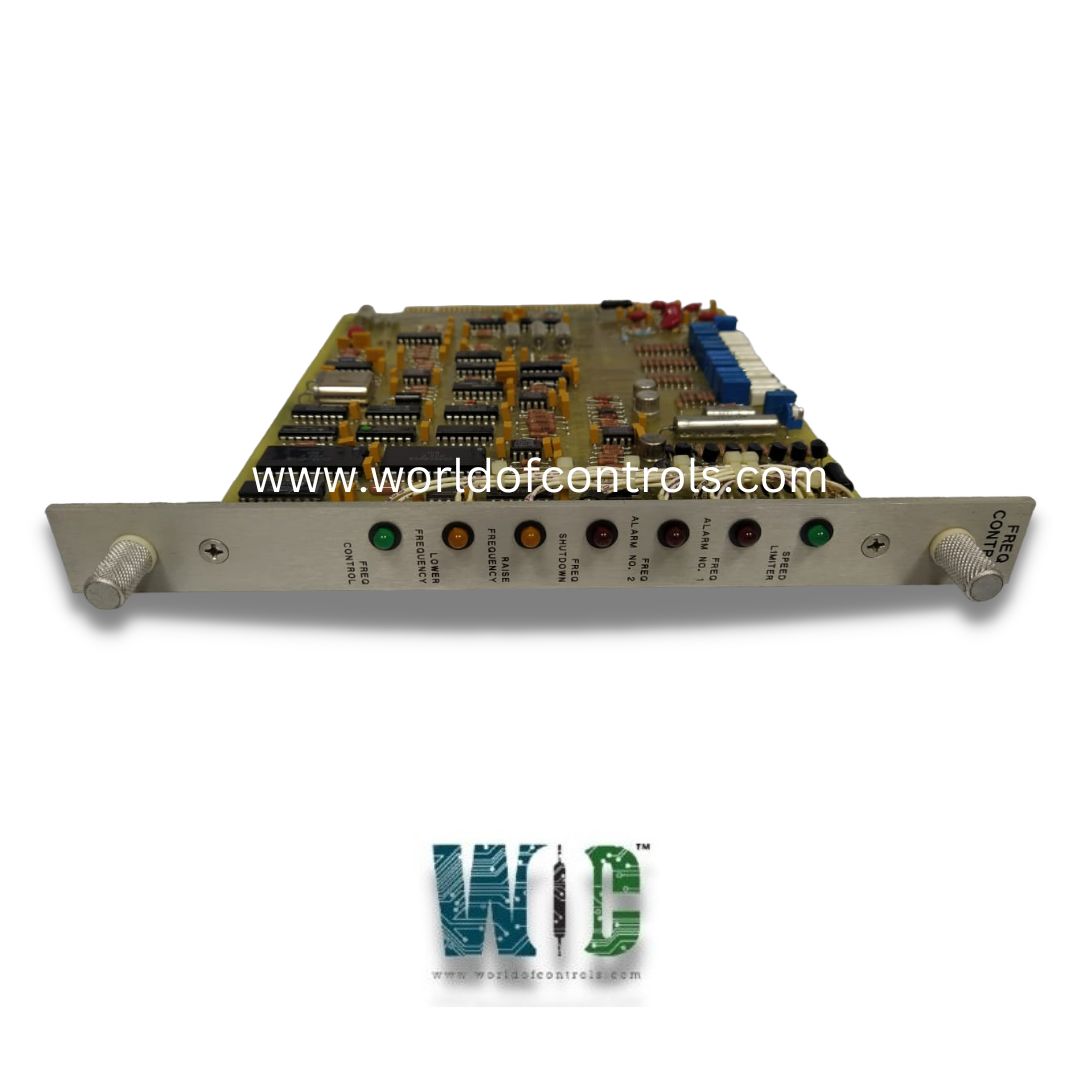
World Of Controls understands the criticality of your requirement and works towards reducing the lead time as much as possible.
5463-339 - 48-channel Discrete Input Module (Low Voltage) is available in stock which ships the same day.
5463-339 - 48-channel Discrete Input Module (Low Voltage) comes in UNUSED as well as REBUILT condition.
To avail our best deals for 5463-339 - 48-channel Discrete Input Module (Low Voltage), contact us and we will get back to you within 24 hours.
TECHNICAL SPECIFICATIONS:
Part Number: 5463-339
Manufacturer: Woodward
Series: MicroNet / MicroNet Plus
Module Type: Discrete Input
Number of Channels: 48 Channels
Input Voltage Range: 18–32 VDC (Low Voltage Logic)
Input Threshold: 12 VDC (Typical)
Input Current: 2.5–3.5 mA (Per Channel)
Response Time: 1 ms (Hardware Filter)
Isolation: 500 Vdc (Field-to-Logic)
Operating Temp: -30 °C to +65 °C (-22 °F to +149 °F)
Availability: In Stock
Origin: United States
FUNCTIONAL DESCRIPTION:
The 5463-339 is a high-density 48-Channel Discrete Input Module designed for the Woodward MicroNet control systems. Optimized for low-voltage industrial logic, this module provides the interface necessary to monitor a wide array of digital field states, such as breaker positions, auxiliary relay contacts, and safety interlocks. With 48 channels in a single slot, it offers a compact footprint for extensive system sequencing and status monitoring.
OPTIMIZED LOW-VOLTAGE SENSING
The Discrete Input Module is specifically engineered to handle standard 24 VDC nominal field signals (operating range of 18–32 VDC). This makes it the primary choice for modern control cabinets where 24V is the standard for discrete logic. Each of the 48 channels is optically isolated, ensuring that external electrical noise or transients do not affect the sensitive MicroNet backplane or the main CPU module.
PRECISION SIGNAL CONDITIONING
To prevent nuisance triggers caused by contact bounce or electromagnetic interference (EMI), the Discrete Input Module utilizes integrated hardware filtering and signal conditioning on every channel. A 1 ms hardware filter ensures that only stable state changes are registered by the control logic. This high-speed response is critical for capturing sequence-of-events data and reacting to rapid protective trip signals in turbine and engine applications.
DIAGNOSTICS AND SYSTEM RELIABILITY
The module is fully integrated into the Woodward MicroNet diagnostic framework. It continuously monitors its internal circuitry and the integrity of the communication bus. If a hardware fault is detected, the module reports it to the CPU, and the onboard Fault LED provides an immediate visual alert for maintenance personnel. This proactive monitoring ensures that the safety and sequencing logic of the prime mover remains uncompromised.
WHY BUY FROM WOC:
World of Controls supports the continuous operation of your Woodward MicroNet systems by offering the 5463-339 in both UNUSED and REBUILT conditions. Every module is subjected to comprehensive testing on specialized diagnostic rigs to verify the switching thresholds and optical isolation of all 48 channels. We maintain a robust inventory of MicroNet I/O to ensure that your critical systems stay online with minimal downtime. With global logistics and 24/7 technical support, WOC is your dependable partner for high-precision industrial control hardware.
What is the Woodward 5463-339?
The 5463-339 is a 48-channel Discrete Input module used in MicroNet systems to monitor the state of 24 VDC field contacts, such as switches and relays.
How many channels does the 5463-339 provide?
It provides 48 independent, optically isolated discrete input channels in a single VME-based module slot.
Is this module compatible with high-voltage (125 VDC) inputs?
No. The Discrete Input Module is a low-voltage module designed for 24 VDC nominal systems. For 125 VDC applications, you should use a module like the 5463-337.
How do I connect the field wiring to this module?
The Discrete Input Module typically interfaces with field wiring through high-density cables connected to Field Termination Modules (FTMs) mounted on the cabinet DIN rail. Each module generally requires two 24-channel FTMs for a full 48-point setup.