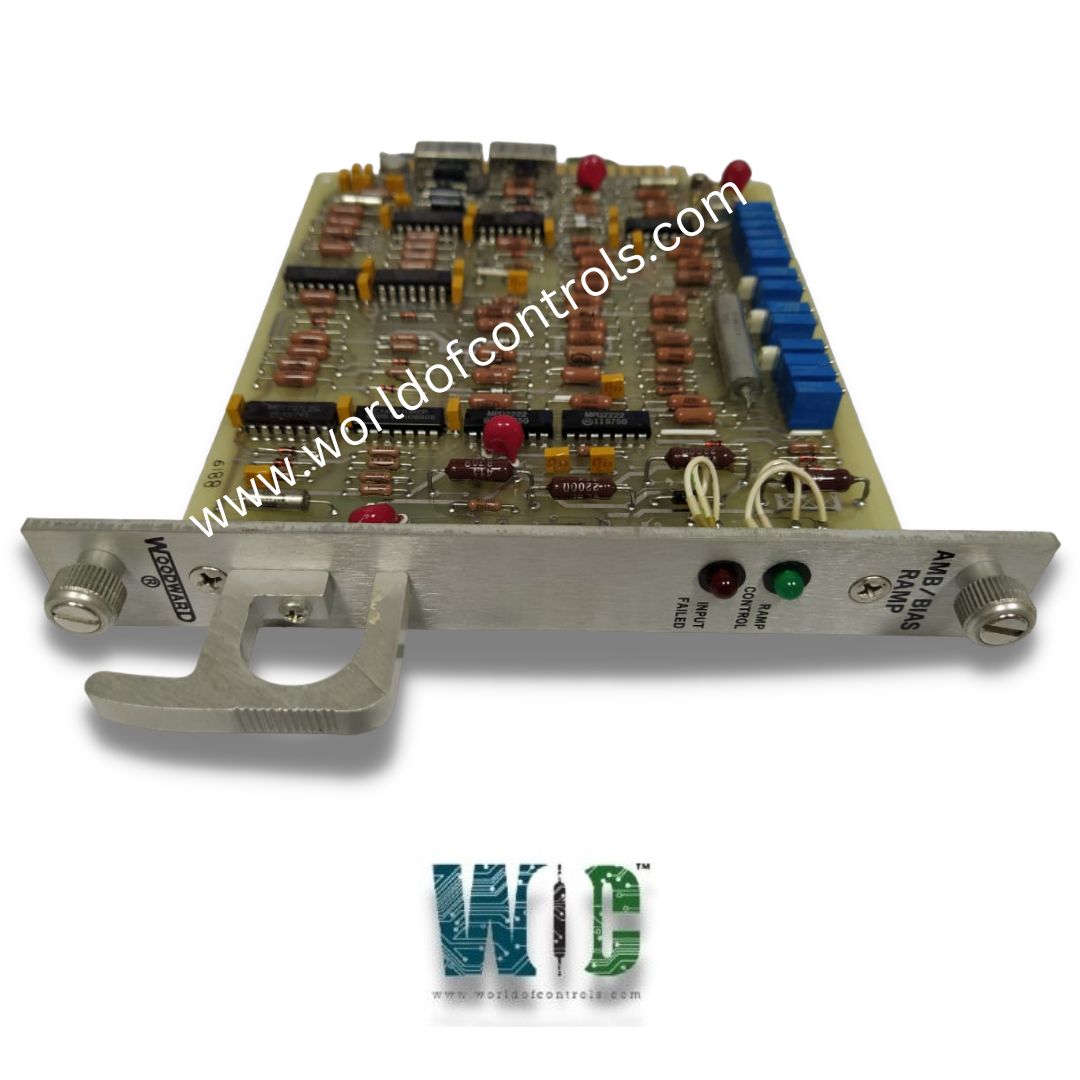
World Of Controls understands the criticality of your requirement and works towards reducing the lead time as much as possible.
5462-241 - 4-channel MicroNet Actuator Driver Module (0�200 mA) is available in stock which ships the same day.
5462-241 - 4-channel MicroNet Actuator Driver Module (0�200 mA) comes in UNUSED as well as REBUILT condition.
To avail our best deals for 5462-241 - 4-channel MicroNet Actuator Driver Module (0�200 mA), contact us and we will get back to you within 24 hours.
TECHNICAL SPECIFICATIONS:
Part Number: 5462-241
Manufacturer: Woodward
Series: MicroNet / MicroNet Plus
Module Type: Actuator Driver
Number of Channels: 4 Channels
Output Current: 0–20 mA or 0–200 mA (Software Selectable)
Resolution: 12-Bit
Accuracy: 0.2% of full scale
Update Rate: 5 ms
Isolation: 500 Vdc
External Power: 18–32 VDC (24 VDC Nominal)
Operating Temp: -30 °C to +65 °C
Availability: In Stock
Origin: United States
FUNCTIONAL DESCRIPTION:
The 5462-241 is a 4-Channel Actuator Driver Module engineered for the Woodward MicroNet and MicroNet Plus control platforms. This module serves as the primary interface for driving high-precision actuators, providing the proportional current necessary to control fuel valves, steam valves, and guide vanes. By converting digital control logic into high-integrity analog signals, the Actuator Driver Module ensures precise governing of turbine speed and process variables.
PRECISION ACTUATION FOR CRITICAL LOADS
Each of the four independent channels on the 5462-241 can be software-configured to deliver either a standard 0–20 mA signal or a higher-power 0–200 mA output. This versatility allows the module to drive a wide range of industrial actuators, from small positioners to heavy-duty turbine valves. The 12-bit resolution provides smooth, incremental control, which is essential for maintaining stability during rapid load changes or grid fluctuations.
FIELD ISOLATION AND PROTECTION
To protect the core MicroNet architecture from the harsh electrical environments typical of power plants, the Actuator Driver Module features 500 Vdc of galvanic isolation. This barrier separates the field-side wiring from the internal backplane, effectively blocking ground loops and protecting the CPU from electrical noise or transients. The module is also built to handle the inductive back-EMF often generated by large actuator coils, ensuring long-term hardware reliability.
INTEGRATED SELF-DIAGNOSTICS
The Actuator Driver Module is fully integrated into MicroNet's continuous diagnostic framework. The module monitors its own internal health and the integrity of the external field circuits in real-time. It can identify Open Load (broken wire) or Short Circuit conditions, immediately notifying the central processor to initiate alarms or failsafe protocols. This proactive fault detection is a vital component of maintaining high system availability and operational safety.
WHY BUY FROM WOC:
World of Controls supports your Woodward infrastructure by offering the 5462-241 in both UNUSED and REBUILT conditions. Every module is subjected to comprehensive testing on specialized MicroNet test benches to verify current accuracy, response times, and diagnostic functionality. With our global logistics network and 24/7 technical expertise, WOC is your trusted source for high-performance control system components.
What is the Woodward 5462-241?
The 5462-241 is a 4-channel Actuator Driver module for MicroNet systems, used to provide precise proportional current for driving turbine valves.
What is the difference between the 20 mA and 200 mA modes?
The 20 mA mode is for standard industrial positioners, while the 200 mA mode provides the higher current required by larger, more powerful actuator coils used in steam and gas turbines.
Can I use this module in a redundant MicroNet Plus system?
Yes, the 5462-241 is designed for both Simplex and Redundant architectures. In redundant systems, it can be used to manage dual-coil actuators or independent control paths for increased reliability.
How does the module handle a loss of signal?
The module can be configured via software to either hold its last position or move to a predefined safe state if it loses communication with the CPU, protecting the turbine from uncontrolled movements.