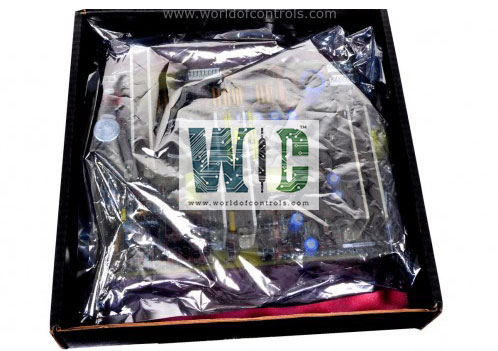
World Of Controls understands the criticality of your requirement and works towards reducing the lead time as much as possible.
IS230TSPRH2C - DIN-Rail Emergency Protection Module is available in stock which ships the same day.
IS230TSPRH2C - DIN-Rail Emergency Protection Module comes in UNUSED as well as REBUILT condition.
To avail our best deals for IS230TSPRH2C - DIN-Rail Emergency Protection Module, contact us and we will get back to you within 24 hours.
SPECIFICATIONS:
Part Number: IS230TSPRH2C
Manufacturer: General Electric
Series: Mark VIe
Product Type: DIN-Rail Emergency Protection Module
Number of channels: 16
Voltage Range: 14 to 32 V dc
Maximum Lead Resistance: 15 Ohms
Outputs: 24 V dc
Mounting: DIN-rail mounting
Technology: Surface mount
Operating Temperature: -30 to 65�C
Size: 15.9 cm high x 17.8 cm
Repair: 3-7 Days
Availability: In Stock
Weight: 2 lbs
Country of Origin: United States
FUNCTIONAL DESCRIPTION:
IS230TSPRH2C is a DIN-Rail Emergency Protection Module manufactured and designed by General Electric as part of the Mark VIe Series used in GE Distributed Control Systems. This protection module fulfills two basic functions. First, it distributes the current of a large power source to four lower current output channels and therefore allows for smaller wires to be used. The second function is to permit only so much current on the outputs that the input voltage of this unit (which corresponds to the output voltage of the power supply) does not fall below 21V. This ensures a reliable supply voltage for sensitive equipment, such as PLCs, controls, or sensors, when they are connected directly to the same power supply as the protection module. The protection module has one 24V input and four output channels to which the current is distributed. Each output channel is equipped with a redundant over-current protection, which prevents wires from being overloaded. All four output channels will shut down simultaneously if the current of one individual channel or the maximum allowed current for the protection module is exceeded. A voltage monitor circuit in the input stage of the module works like a valve. It permits only so much current that the input voltage does not drop below 21V. In case the input voltage falls below this value due to overloads, too small a power supply, or high inrush currents, such as from starting a motor, all four output channels will be actively current-limited and will shut down after a certain period of time.
INSTALLATION:
This protection module is designed for DIN-rail mounting and is compatible with DIN-Rails according to EN 60715 or EN 50022, with heights of 7.5 mm or 15 mm. It can operate with any regulated 24 V DC power supply. However, if the power source can deliver more than 40 A continuously, the module must be equipped with external input circuit protection (such as a 30�32 A fuse or circuit breaker).
The capability and performance of the power supply may affect the module�s output characteristics. Before applying input voltage, ensure that the polarity is correct, and never connect batteries to the module outputs.
Installation and commissioning should only be performed by qualified personnel, as the unit contains no serviceable parts. In case of damage or malfunction, immediately disconnect power and send the unit to the factory for inspection.
The module relies on convection cooling and does not require an external fan; therefore, airflow must not be obstructed, and ventilation grids should remain uncovered.
CONNECTING CAPACITIVE LOADS TO THE OUTPUTS:
When connecting large input capacitors, such as those in drives, monitors, or similar loads, there is a risk of unintended shutdowns of the module during load turn-on. This can occur, for example, after a reset or when switching on a load via the push button or external signal input. The protection module is specifically designed to handle such situations, offering exceptional compatibility with capacitive loads. It incorporates multiple protection mechanisms to prevent unintended shutdowns or damage to the module. The permissible capacitor size for connection to the module�s outputs depends on both the load current and the characteristics of the connected load, ensuring safe and reliable operation. This avoids a false interpretation of which output channel caused the problem. If the sync. terminals are not linked, the module with the highest voltage monitor protection voltage level (caused by tolerances) would shut down first, regardless of whether the failure was caused by this module or not.
WOC maintains the largest inventory of GE Distributed Control System (DCS) replacement parts, including both unused and fully rebuilt components, all supported by a dependable warranty. In addition to supplying high-quality parts, our team of experienced automation specialists provides 24/7 technical support, offering guidance on installation, configuration, diagnostics, and system troubleshooting to ensure seamless and reliable operation. We also deliver expert repair services for faulty modules, helping minimize downtime and maintain optimal system performance. Whether you need replacement components, repairs, or professional advice on your DCS setup, our specialists are ready to provide prompt, efficient, and dependable solutions to keep your control systems running at peak efficiency.
What is the IS230TSPRH2C?
The IS230TSPRH2C is a DIN-Rail Emergency Protection Module designed to protect turbines, generators, and related electrical circuits from overspeed, overcurrent, overvoltage, overheating, and abnormal conditions. It ensures rapid emergency shutdown and safe operation.
What is the function of this module?
It continuously monitors turbine parameters such as rotor speed, generator current, voltage, temperature, and vibration. Upon detecting values outside preset thresholds, it triggers emergency shutdown outputs or alarms to protect the turbine and electrical circuits.
How does the module detect turbine overspeed?
The module receives input from rotor speed sensors (typically tachogenerators or proximity probes). It continuously compares measured speed to a programmable overspeed threshold. If the rotor exceeds the threshold, the module immediately triggers a hardware trip relay, shutting down the turbine within milliseconds to prevent mechanical failure.