World Of Controls understands the criticality of your requirement and works towards reducing the lead time as much as possible.
DS215MVMAH1A - DIN-Rail-Mounted Migration I/O Terminal Board is available in stock which ships the same day.
DS215MVMAH1A - DIN-Rail-Mounted Migration I/O Terminal Board comes in UNUSED as well as REBUILT condition.
To avail our best deals for DS215MVMAH1A - DIN-Rail-Mounted Migration I/O Terminal Board, contact us and we will get back to you within 24 hours.
SPECIFICATIONS:
Part Number: DS215MVMAH1A
Manufacturer: General Electric
Series: Mark V
Product Type: DIN Rail Mounted Migration IO Terminal Board
Power IO: +5 V DC, 6 A
Input Channels: 24
Relay Channels: 12
Contact Outputs: Up to 96
Relay Outputs: Up to 60
Supply Voltage: 18-32 V DC
Mounting: DIN-rail
Operating System: QNX
Operating Temperature: -40 �C to +70 �C
Weight: 2 lbs (0.91 kg)
Repair Turnaround Time: 3-7 Business Days
Availability: In Stock
Country of Origin: United States
FUNCTIONAL DESCRIPTION:
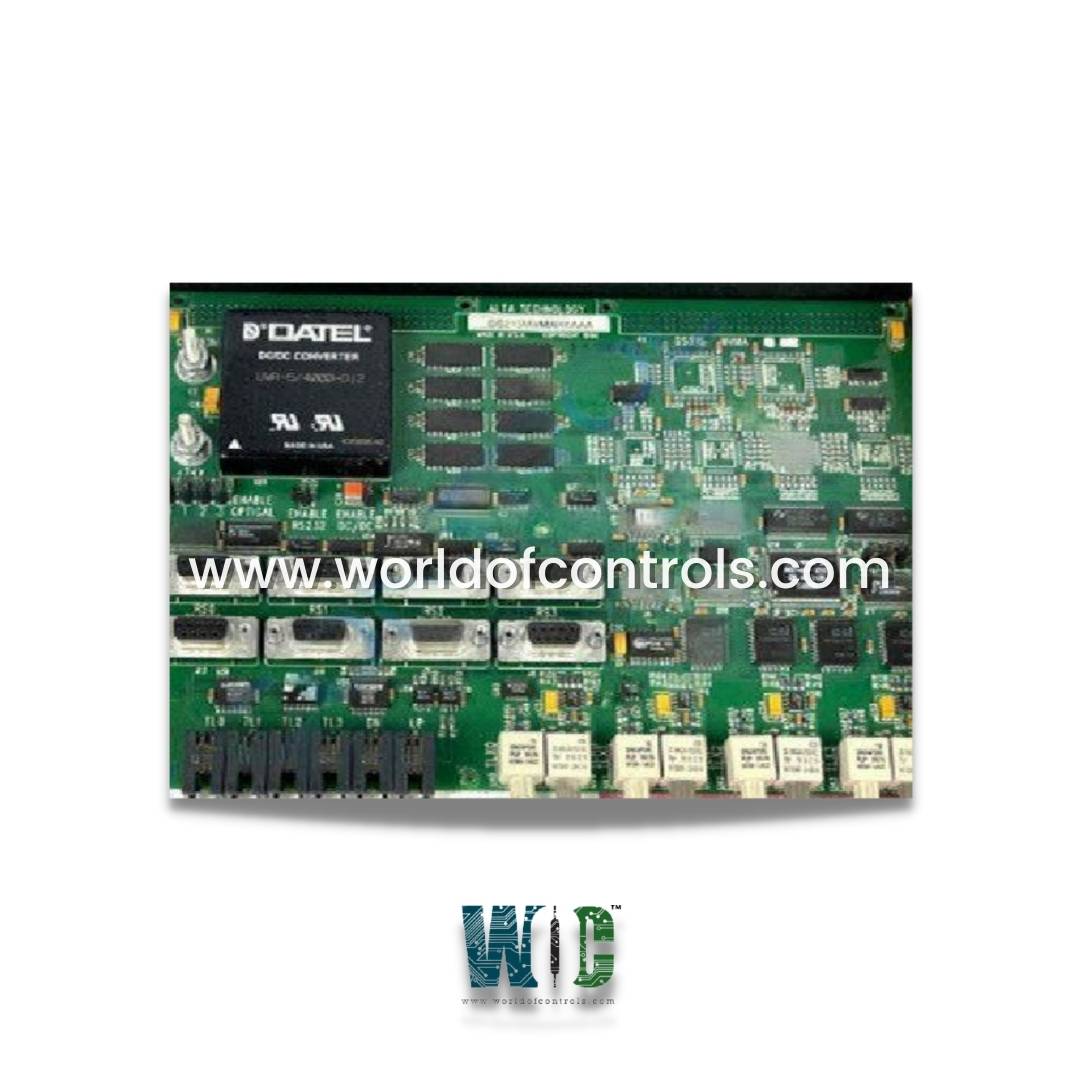
The DS215MVMAH1A is a DIN-Rail-Mounted Migration I/O Terminal Board manufactured by General Electric as part of the Mark V Series for GE Speedtronic Gas Turbine Control Systems. It provides a compact and modular interface between field devices, such as sensors and actuators, and industrial control systems. Designed for standard 35 mm DIN rail mounting, it enables organized signal termination and supports the seamless migration of analog and digital signals from legacy systems to modern automation architectures. The board ensures reliable connectivity, proper signal routing, and compatibility with PLCs, DCS, and turbine control systems without requiring extensive rewiring.
Equipped with signal conditioning, galvanic isolation, surge protection, and overvoltage safeguards, the board maintains signal integrity and protects both field devices and controllers in harsh industrial environments. Its modular design allows for easy installation, expansion, and maintenance, making it an ideal solution for retrofits, system upgrades, or distributed control applications where efficient, reliable I/O integration is critical.
CHANNEL TYPES AND SIGNAL COMPATIBILITY:
The DS215MVMAH1A DIN-Rail-Mounted Migration I/O Terminal Board supports a combination of analog and digital input/output channels, providing flexibility for integration with a wide range of field devices. Analog channels typically handle standard industrial signal ranges, such as 4�20 mA or 0�10 V, for sensors, transducers, and process instrumentation. Digital channels accommodate discrete on/off signals for switches, relays, or pulse inputs. Each channel is equipped with signal conditioning and isolation, ensuring compatibility with both legacy and modern control systems while maintaining accurate, noise-free communication across long wiring runs.
OPERATION:
The board supports sink or source logic configurations, depending on the system wiring, and employs input filtering to reject spurious voltage spikes and bounce effects caused by mechanical contacts. Signal thresholds are calibrated to GE standard logic level specifications, typically 0-0.8 VDC for logic LOW and 2-5 VDC for logic HIGH. For outputs, the board drives digital control signals such as relay energizing commands or system interlocks with isolated control paths, protecting the logic side from high-energy field circuits. Surge protection components such as TVS diodes or RC snubbers are embedded into the board�s design to absorb fast transients and electrostatic discharge (ESD) events. It supports continuous polling or interrupt-driven operation, based on the configuration in the Mark V software.
DIAGNOSTICS & FAULT INDICATION:
This board is compatible with TCCB (Control Core Cards), TCQA (Communications Interface Cards), and other Mark V rack-based modules that interface through the MV2000 backplane bus or T-Link-connected subsystems. The board supports integration with primary and backup controllers in simplex or dual-redundant Mark V architectures. The board interfaces directly with STCA, STCI, and STCO I/O interface boards for routing discrete digital signals. It maintains full electrical and protocol-level compatibility with the Mark V or HMI workstations, enabling operator interface functionality, real-time diagnostics, and command execution. Additionally, MVMA boards can be monitored and configured using GE's Mark V Toolbox software, allowing channel-level signal mapping, status monitoring, and dynamic parameter adjustment.
WOC maintains the largest inventory of OEM replacement parts for GE Speedtronic Gas Turbine Control Systems, offering both brand-new and expertly rebuilt components, all backed by a comprehensive warranty to ensure reliability in critical applications. A dedicated team of skilled engineers and technical specialists is available 24/7 to provide guidance, troubleshoot issues, and support all your automation and control system needs. Whether you require replacement parts, repair services, or consultation on system upgrades, prompt and dependable solutions are provided to minimize downtime and keep your turbine and control systems operating at peak efficiency. For pricing, availability, or technical assistance, our experts are ready to assist via phone or email, delivering tailored solutions that ensure smooth and uninterrupted operations.
What is the DS215MVMAH1A?
The DS215MVMAH1A serves as a modular interface board, connecting sensors, actuators, and controllers within the control architecture. It enables reliable signal routing and integration while supporting system migration and expansion.
What is a DIN-Rail-Mounted Migration I/O Terminal Board?
It is a modular interface board that connects field devices, such as sensors and actuators, to control systems while supporting migration from legacy systems to modern automation architectures. Mounted on a standard 35 mm DIN rail, it provides organized signal termination, isolation, and conditioning, enabling reliable communication in industrial control panels.
What types of channels does the board support?
The board accommodates a combination of analog and digital channels. Analog inputs typically operate in the 4�20 mA or 0�10 V range, while digital inputs/outputs handle discrete signals. Each channel includes signal conditioning and isolation to ensure compatibility with both legacy and modern controllers.