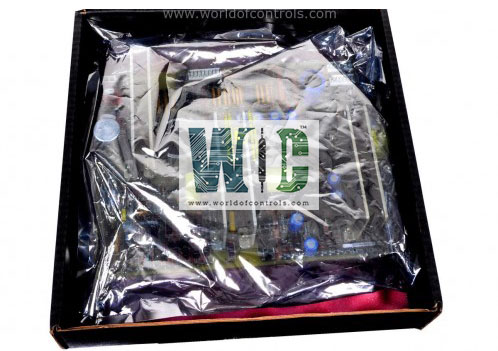
World Of Controls understands the criticality of your requirement and works towards reducing the lead time as much as possible.
8434-246 - ProTech-GII Over Speed Protection Module is available in stock which ships the same day.
8434-246 - ProTech-GII Over Speed Protection Module comes in UNUSED as well as REBUILT condition.
To avail our best deals for 8434-246 - ProTech-GII Over Speed Protection Module, contact us and we will get back to you within 24 hours.
TECHNICAL SPECIFICATIONS:
Part Number: 8434-246
Manufacturer: Woodward
Series: ProTech-GII
Module Type: Over Speed Protection System
Configuration: 3 independent channels (two-out-of-three voting)
Input Types: Magnetic Pickup (MPU) or Proximity Probes
Speed Range: 0.5 Hz to 30 kHz
Output Relays: Dual Programmable Trip Relays per channel
Response Time: < 12 milliseconds
Power Input: 18–32 VDC (High-voltage versions available)
Operating Temp: -20 °C to +60 °C
Availability: In Stock
Origin: United States
FUNCTIONAL DESCRIPTION:
The 8434-246 is a high-speed Over Speed Protection Device part of the Woodward ProTech-GII series. It is designed to safely shut down steam, gas, and hydro turbines upon sensing an overspeed event. The ProTech-GII is a safety-certified system that monitors three independent speed sensors to provide a high level of reliability and availability, ensuring that a single sensor or component failure does not cause a nuisance trip or, more importantly, a failure to trip.
VOTING LOGIC AND SAFETY INTEGRITY
The 8434-246 utilizes internal two-out-of-three voting logic. Each of its three channels monitors an independent speed signal. If any two of the three channels detect an overspeed condition, the system initiates a trip command. This architecture is designed to meet SIL 3 (Safety Integrity Level) requirements, providing the necessary protection for critical prime movers in the power generation and oil and gas industries.
COMPREHENSIVE MONITORING AND TESTING
Beyond simple speed monitoring, the ProTech-GII features advanced acceleration detection and speed-fail sensing. It includes an integrated frequency generator, allowing operators to perform online trip tests without shutting down the turbine. This capability ensures that the mechanical trip valves and electrical circuits remain functional, maintaining the plant's safety envelope during continuous operation.
DIAGNOSTICS AND EVENT LOGGING
The 8434-246 provides extensive diagnostic feedback through its front-panel display and communication ports. It records the peak speed reached during a trip event and maintains an event log for post-trip analysis. This data is vital for troubleshooting the root cause of a turbine shutdown and for verifying that the protection system operated within its specified response time.
WHY BUY FROM WOC:
World of Controls supports the safety-critical ProTech-GII series by providing the 8434-246 in both UNUSED and REBUILT conditions. Each unit is rigorously tested on specialized speed-simulation benches to verify trip setpoints, voting logic accuracy, and relay response times. Backed by our global logistics and technical support, WOC is your trusted source for maintaining the highest safety standards for your Woodward-controlled assets.
What is the Woodward 8434-246?
The 8434-246 is an overspeed protection module from the ProTech-GII series. It monitors turbine speed through three sensors and initiates a safety shutdown if an overspeed or over-acceleration condition is detected.
What is the benefit of Two-out-of-Three) voting?
This logic prevents a single sensor failure from causing a false trip (nuisance shutdown) while ensuring that the system will still trip even if one of the three channels fails to respond.
Can the 8434-246 be tested while the turbine is running?
Yes, the ProTech-GII is designed for online testing. It allows for individual channel testing to verify the trip circuitry without actually shutting down the turbine.
What speed sensors are compatible with this module?
The module is compatible with standard Magnetic Pickups (MPUs) and active proximity probes, supporting a wide frequency range from slow-roll detection up to 30 kHz.